Originally built for SAMI and appeared in the August 2005 issue.
The kit.
Attractively packaged in Special Hobby's distinctive boxing, this is a relatively simple model, with all parts contained on one sprue. Although nicely cast, some of the panel lines on the wings are a little bit crude, lacking the finesse seen elsewhere on the model. Finer detail items are provided in resin, including very nicely done one piece cowling. The decal sheet is very good and provides markings for three schemes. The instruction sheet follows the familiar Special Hobby layout using 2 sheets of folded A4 and Gunze colour references.
Construction.
First thing to do is to thin down the rudder on the inside surfaces, as it will be too thick if left as is. The fuselage halves can then be joined together before adding any of the cockpit items. The floor, seat and instrument panel are nicely detailed and more than make up for the lack of sidewall detail. They can be offered up from below. The roll-over bar is also attached at this point. The wheel well is fully open just like on the real thing and although it uses minimal parts to detail this area, the overall impression is fairly convincing. As with the rudder, it is worth thinning down the trailing edges of the wing halves. When done, their assembly is made much easier if the top pieces are attached to the fuselage first and the lower section offered up afterwards. This will help give a neater join. Although the undercarriage appears to be flimsy, it strengthens up nicely when all the doors are glued together. One act of patience is the resin engine. Each cylinder is separately cast and has no pushrod detail, which is a shame as the engine is easily viewable.
The canopy should be trimmed and glued in place, to act as a guide for positioning the extremely delicate resin canopy guide rails, as there is no indication to where they go on the fuselage. Early serie C.200 had a retractable rear tail wheel but Special Hobby have missed this detail. It's an easy fix, as all that's needed are scratch built doors and an aperture made in the fuselage tail for the tailwheel. The instruction sheet gives conflicting information on how to add the gun barrels to the nose. It does not tell you that holes should be drilled first. Fortunately there is engraved detail to guide you. Make sure the angled blast tubes face the front.
Colour options.
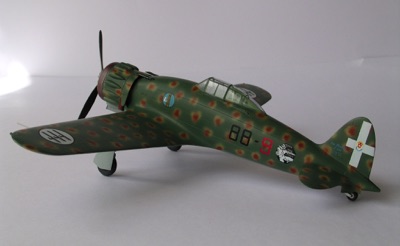
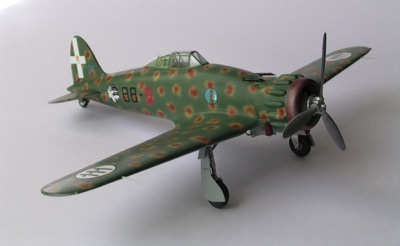
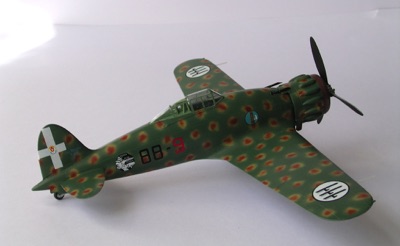
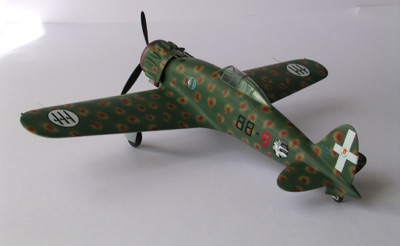
Three schemes are offered, two with the distinctive brown spots outlined in sand. I used Humbrol colours, with 149 used as base, with 63 spots followed by smaller 118 ones. It does demand good airbrush control (and a good airbrush for that matter) but looks great if done correctly. Lower surfaces were 140. I used a mix of silver and brown for the oil cooler ring, as feel that using cooper or brass is too garish. Decals sit nicely on a varnished surface, but I fear the wing roundels are too small and there is just a hint of mis-register on the red.
Conclusions
With so many 1/48th C.200 models to choose from, it's about time an accurate, decent 1/72nd scale model arrived on the scene. This model certainly fits the bill and being an early version makes it all the more welcome as I believe it has never appeared in this scale. Highly recommended indeed.
Many thanks to Special Hobby for the review sample.